EN

News
Horizontal Round Bottle Labeling Machine: Designed for Small Bottles Such as Eye Drop Bottles
Eye drop bottles, oral liquid bottles, ampoules, vials, and nasal spray bottles share several common characteristics: they are narrow, lightweight, and difficult to keep upright during labeling. Their diameters typically range from 14 mm to 28 mm. An eye drop bottle is so small and light that it can barely be felt in your hand. Keeping these bottles stable on a conveyor is already challenging, let alone applying labels accurately and smoothly. Manual labeling can hardly ensure consistent results.
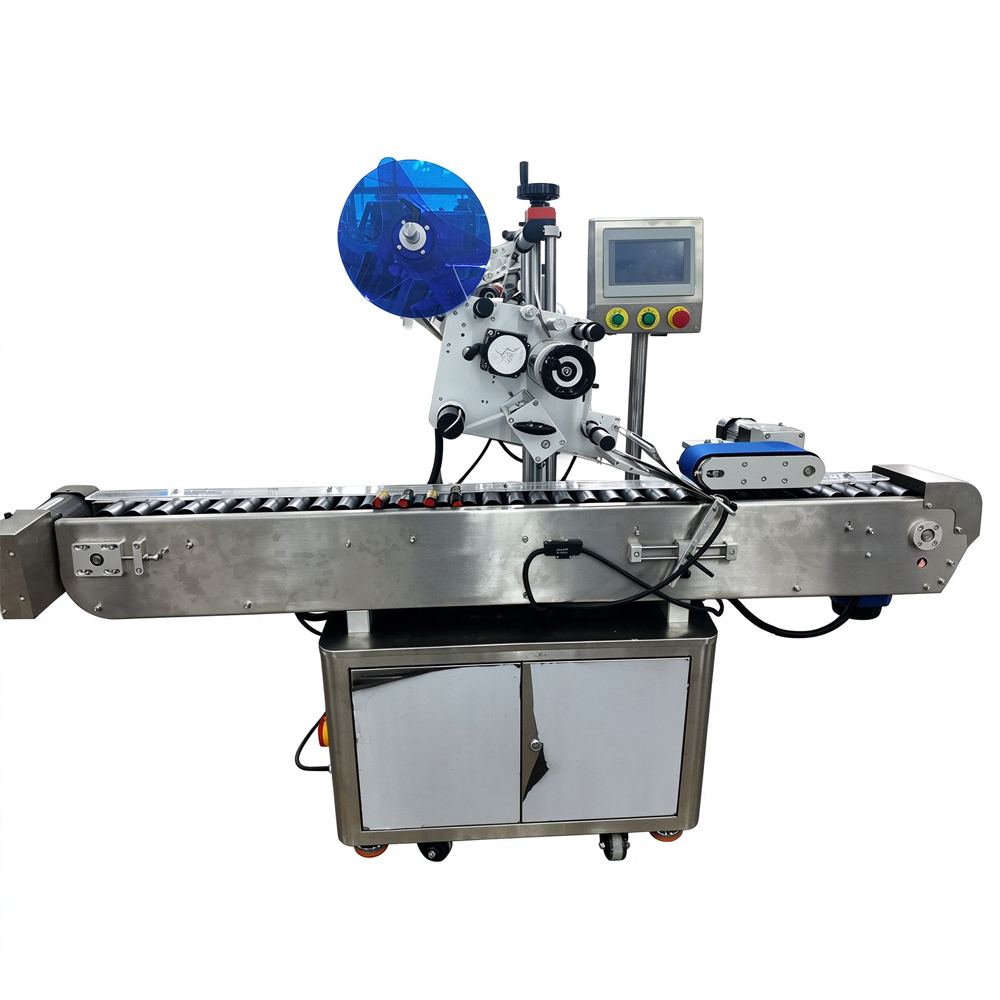
A horizontal round bottle labeling machine is specifically designed for labeling these small cylindrical products. Instead of keeping bottles upright during the labeling process, the machine handles them horizontally. Bottles enter the conveying system in a lying position and are supported or guided by specialized mechanisms on both sides. This prevents them from wobbling or falling over during labeling.
Why Should Small Bottles Be Labeled Horizontally?
During vertical labeling, bottles stand upright on the conveyor belt and rely on bottom support and side guides to maintain their position. This method works well for conventional round bottles with larger diameters and heavier bodies. However, small bottles such as eye drop containers have a relatively high center of gravity and a small supporting base.
Even slight conveyor vibrations or minor deviations in the guide rails can cause these bottles to tilt or fall over. Once a bottle loses its upright position, the label may be applied incorrectly, potentially causing product jams and unplanned machine stoppages.
Horizontal labeling provides a more stable solution. Baottles are placed horizontally and supported by the bottom and side guiding mechanisms. Their position is controlled throughout the labeling process, reducing unwanted movement caused by labeling pressure.
This structural design improves bottle stability rather than relying solely on higher conveyor accuracy to maintain the correct position.
The machine is suitable for products with diameters ranging from 14 mm to 28 mm. Its labeling accuracy is ±1 mm, with an operating speed of 100–300 bottles per minute.
Main Machine Specifications:
Product Diameter: 14–28 mm
Label Length: 15–100 mm
Label Width: 15–100 mm
Labeling Accuracy: ±1 mm
Labeling Speed: 100–300 pcs/min
Machine Dimensions: 2000 × 680 × 1450 mm (L × W × H)
Power Supply: 220V / 50Hz
Working Air Pressure: 0.8 MPa
Key Factors to Consider When Selecting a Horizontal Bottle Labeling Machine
1. Check Whether the Bottle Diameter Is Within the Supported Range
This model is designed for bottles with diameters between 14 mm and 28 mm. If your production line handles both standard eye drop bottles and thinner ampoules, which may have diameters below 14 mm, you should confirm whether the machine can accommodate the smallest bottle size.
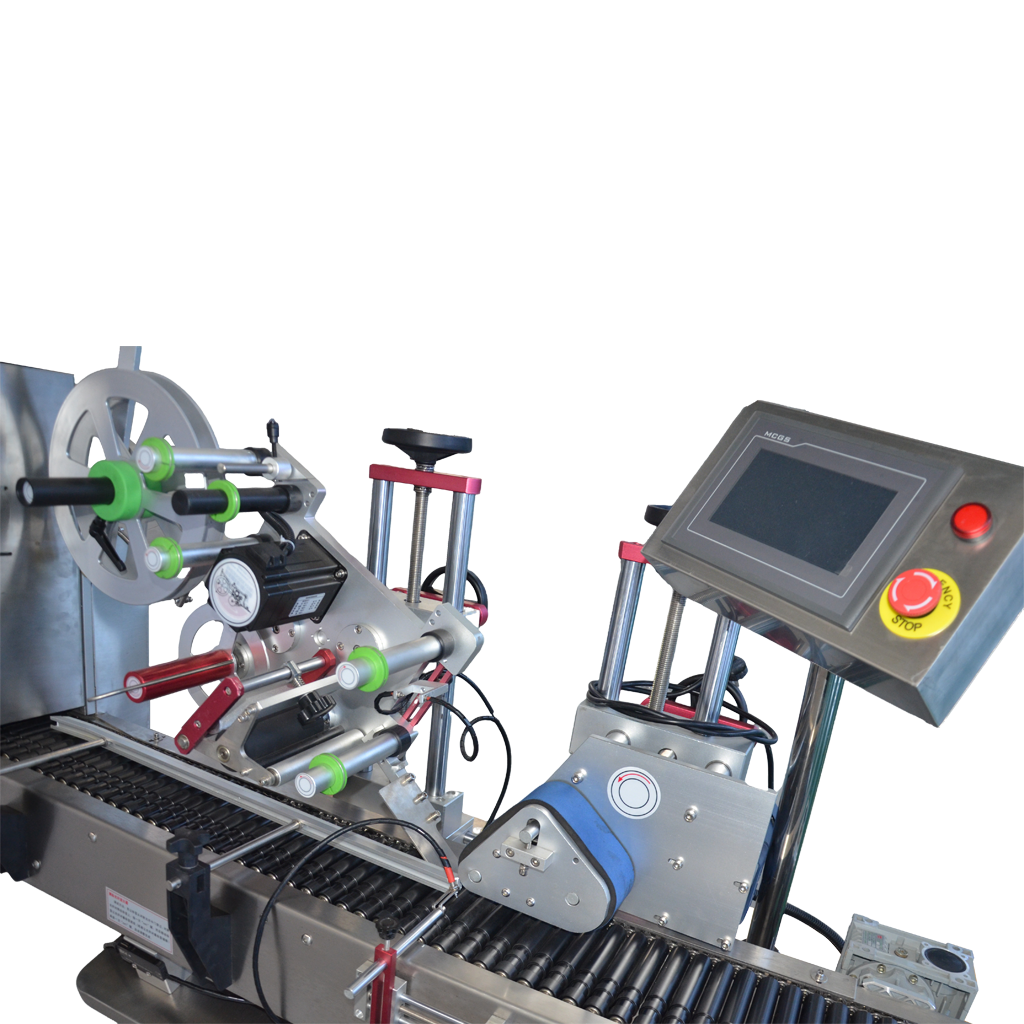
The compatibility of the bottle separating wheel and guiding components should also be evaluated. Products outside the specified diameter range may require a different machine model or a customized solution.
2. Make Sure the Label Dimensions Match the Machine Specifications
The supported label length and width range is 15–100 mm.
If your labels are narrower than 15 mm, such as certain miniature batch identification labels, check whether the machine can feed and apply them consistently. For labels longer than 100 mm, a larger machine configuration may be necessary.
3. Check the Convenience of Bottle Separating Wheel and Guide Adjustments
Production lines handling multiple bottle sizes often require frequent product changeovers. If each changeover involves extensive manual adjustments, overall equipment efficiency can be significantly reduced.
Before purchasing, check whether the machine supports convenient parameter adjustments, quick-change bottle separating wheels, and precise guide spacing adjustments.
4. Evaluate the Risk of Bottle Surface Damage
During horizontal conveying, the bottle surface comes into contact with the guiding components and supporting surfaces. For bottles with printed graphics or special surface coatings, friction may cause scratches or other cosmetic damage.
When testing the machine with actual bottle samples, pay attention to the material of the contact surfaces and the applied pressure. Make sure the conveying process does not affect the bottle's appearance.
5. Focus on Actual Production Output, Not Just Maximum Rated Speed
The rated operating speed of this machine is 100–300 pieces per minute.
Although short labels allow relatively frequent label dispensing, bottle separation and position control are often the real limiting factors at high speeds.
It is recommended to test the machine at your target production speed and run it continuously for a suitable period. Observe whether bottles fall over, become jammed, or experience label position deviations.
6. Confirm the Availability of Compressed Air
This model requires a working air pressure of 0.8 MPa. Before installation, check whether your facility has a compressed air supply capable of meeting this requirement.
If there is no centralized air supply in your workshop, an additional air compressor may be required. This should be included in the initial equipment installation plan.
Conclusion
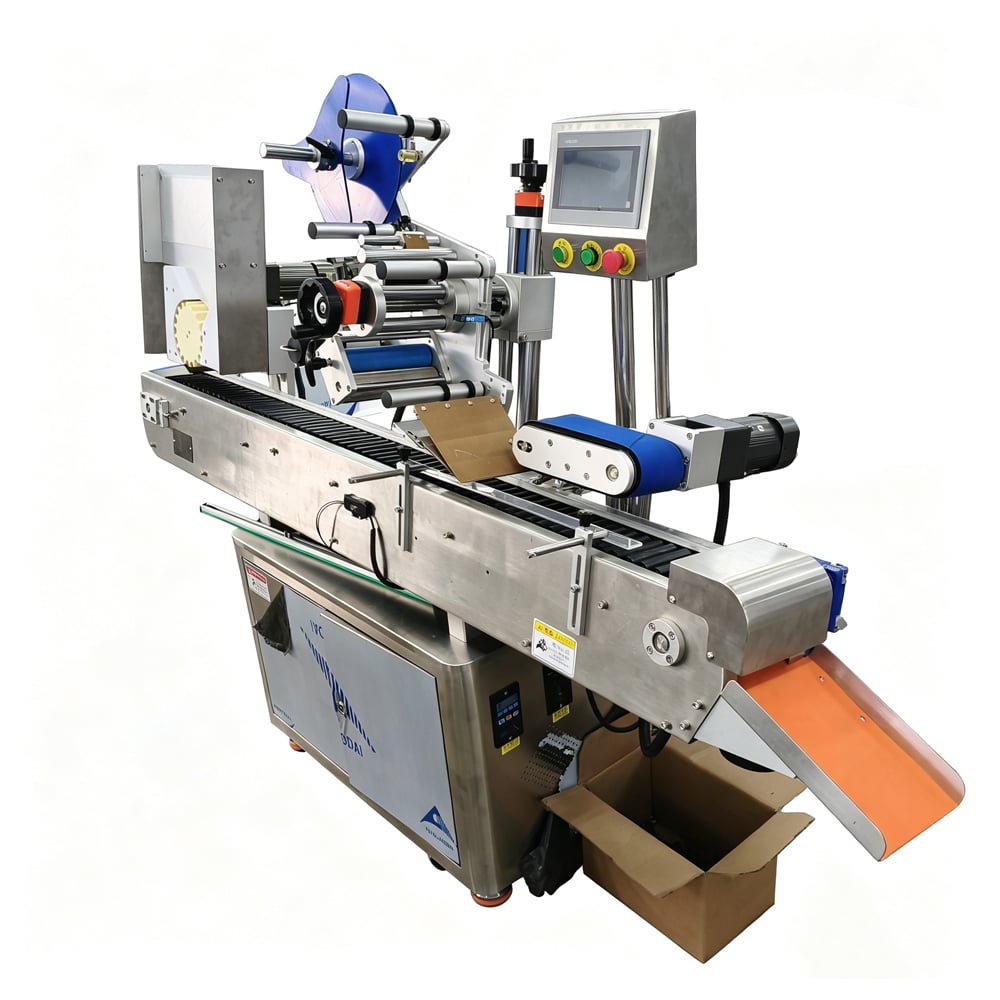
The main advantage of a horizontal round bottle labeling machine is not simply its ability to label small bottles. Its real value lies in addressing the fundamental challenge of small-bottle labeling: lightweight and narrow bottles are difficult to keep stable when standing upright.
By placing bottles horizontally, separating them in an orderly manner, maintaining their position through guiding and supporting mechanisms, and applying labels through a controlled rolling process, the machine provides a practical labeling solution for eye drop bottles, oral liquid bottles, ampoules, and other miniature cylindrical containers.
With a product diameter range of 14–28 mm, label dimensions of 15–100 mm, labeling accuracy of ±1 mm, and an operating speed of 100–300 pieces per minute, this model covers a wide range of small round bottle labeling applications.
When selecting equipment, it is more important to focus on bottle separation stability, guide adjustment precision, and changeover efficiency than simply comparing maximum operating speeds.
Small bottles do not become more stable just because a labeling machine runs faster. A horizontal round bottle labeling machine with reliable bottle separation and smooth conveying helps ensure that every bottle receives a consistent and accurately positioned label.